Specifying a Vacation Rental Kitchen Remodeling Job for Guests Who Never Read the Manual
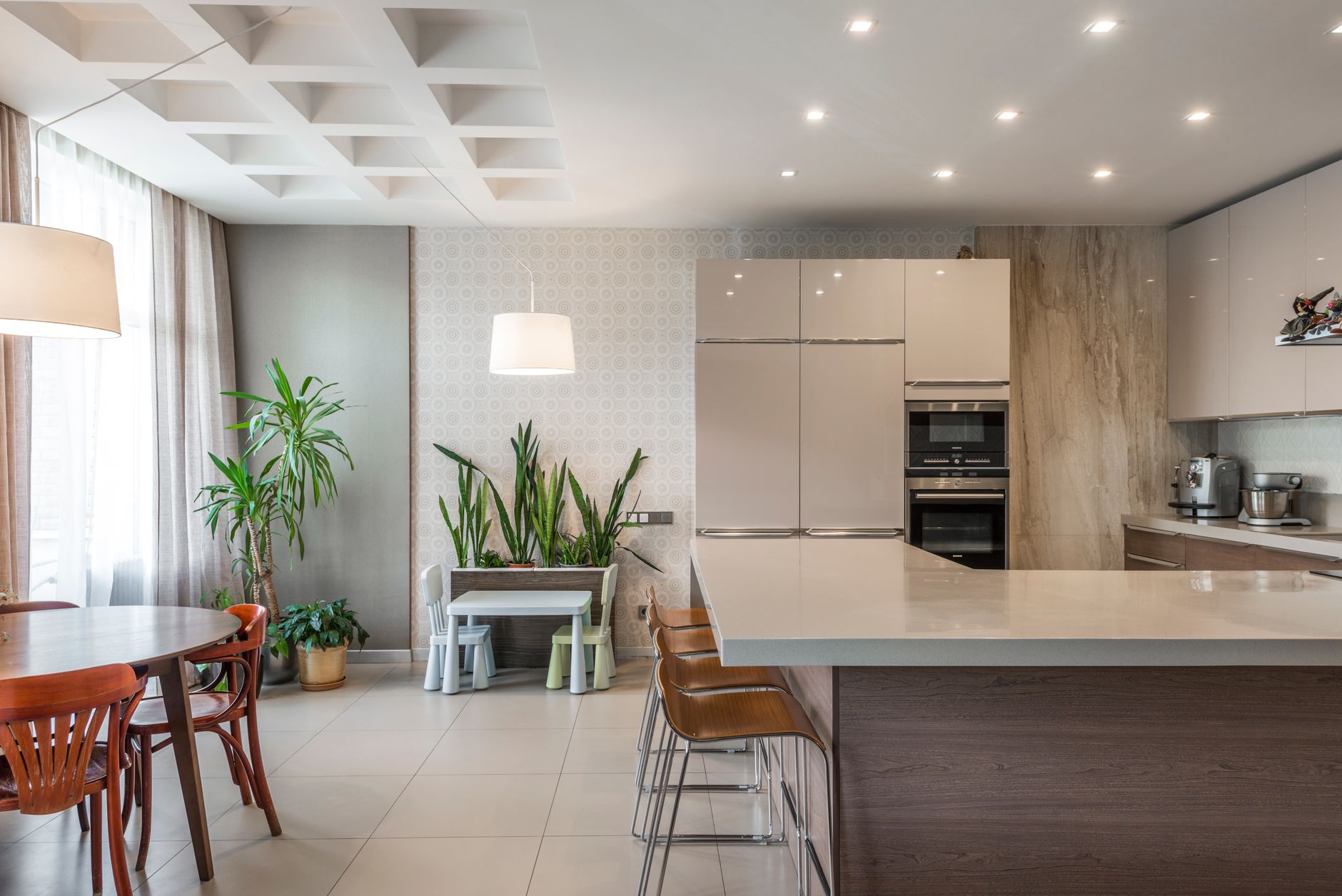
Three different people use the kitchen in a vacation rental, and the owner is the one who uses it least. The guest cooks in it maybe twice across a five night stay, at speed, without reading anything. The cleaner has a fixed window between a checkout and a check in to put the room back into the exact state the listing photos promise. The owner walks through it a few times a year, usually to deal with something the other two reported.
A kitchen designed for a household is designed for people who learn it. They find out within a week that the second drawer sticks, that the oven runs hot, that the pull out bin needs a nudge. A rental kitchen never gets that week. It resets every Saturday to a cook who has never been in the room, has no idea where the colander lives, and has about four minutes of patience before deciding to order in instead.
That is the real brief, and it is why specifying a rental kitchen is a different exercise from specifying a nice one. Owners planning kitchen remodeling in palm springs for a property that hosts strangers tend to arrive with a mood board and leave with an operations manual, because almost every decision worth arguing about turns out to be about turnover, breakage and who can reach what.
Design the owner's closet before anything else
The single most useful square footage in a rental kitchen is the part guests cannot open.
Every operating property accumulates things that must exist on site and must never be available: spare linens, the vacuum, chemicals, the backup coffee maker, the toolkit, replacement light bulbs, the spare set of the exact plates, the paperwork. In most rentals that pile ends up in whichever closet had room, which is usually a bedroom, which means a cleaner crosses the whole house to fetch a dustpan and a guest finds a gallon of degreaser next to their suitcase.
Put it in or immediately beside the kitchen, give it a real door, and lock it. A keyed or coded lock on a tall pantry bay is a small line item at the cabinet stage and close to impossible to add convincingly afterwards. Two details decide whether it gets used: it needs light inside, because nobody finds a spare carafe by phone torch at the end of a shift, and it needs a shelf depth that takes a vacuum upright rather than a stack of towels only.
Keep the fuse of the operation in there too. The water shutoff, the labelled breaker list, the appliance manuals in a single sleeve, and a laminated card with the model numbers. The one time that closet earns its cost is at nine on a Sunday morning when something is leaking and the person standing there is a cleaner, not a plumber.
Appliances for a cook who will not read the manual
Guest appliances are chosen on three criteria, in this order: can a stranger operate it on the first attempt, what happens when they operate it wrongly, and can one part be replaced without replacing the machine.
Induction, gas and what each one forgives
Gas is familiar and forgiving of cookware, and it is the fuel most guests have at home. It also puts an open flame in a house full of people who did not grow up with its quirks, leaves a burner capable of being left on under a towel, and vents combustion products into a room nobody is monitoring.
Induction changes the risk profile substantially. There is no flame, the surface around the pan stays survivable, most units shut down on their own if a pan is removed and left off, and in a desert house the absence of a gas burner running for an hour in July is a cooling load you do not have to fight. The trade is cookware: induction needs flat magnetic pans, so the rental has to supply a full set and the listing has to say so, or a guest who brought their favourite aluminium skillet will report the cooktop as broken. Supplying the pans is the fix, and a rental was always going to supply the pans.
Whichever fuel, choose the simplest model in the range. A cooktop with touch sliders and a menu is a support call. Physical knobs that point at a number are understood by everyone, and so is a conventional oven dial. Resist the convection and steam combination unit with a screen: every feature on it is a feature the guest will not use and the cleaner will have to reset.
Buy the brand whose parts arrive in two days
The honest durability question for a rental is not which appliance lasts longest. It is which one can be put back into service fastest, because an out of service oven in an occupied week is a refund conversation.
That favours mainstream mid market brands with local service coverage and a parts chain, over premium imports whose door gasket ships from another continent. It favours a dishwasher whose rack wheels and spray arm are catalogue items. It favours a refrigerator where the ice maker is a module rather than something integral to the door. Ask whoever is supplying the appliances who services that brand locally, and treat a shrug as a price increase.
Two small specifications worth insisting on: a microwave with a door handle rather than a push latch button, because the latch is the first thing to fail under heavy hands, and a faucet from a line whose cartridge is stocked, since a dripping kitchen faucet gets reported every single stay.
One dishwasher with a better rack, or two dishwashers
This comes up in every rental kitchen that sleeps a crowd, and the answer is usually the rack.
A second dishwasher costs cabinet run, a second water connection, a second drain tie in and a second machine to maintain, and it saves time only on the one night a large group cooks a large meal. A single machine with a properly configured third rack, adjustable tines and a genuinely useful cutlery tray handles the realistic worst case, which is a party's worth of glassware rather than a restaurant's worth of pots.
Where a second unit does earn its place is a property that hosts back to back large groups, because the operational value is not capacity during the stay. It is that a cleaner can run the full inventory through one machine while loading the other. If that is the actual pattern, specify it. If it is a hypothetical, spend the money on hardware instead.
Hardware is what fails first, and it is the cheapest thing to overspecify
Nothing in a rental kitchen takes the beating that the moving parts do. A drawer in a family home is opened a few times a day by someone who knows how far it goes. The same drawer in a rental is yanked to its stop by someone hunting for a bottle opener, then shut with a hip.
So specify full extension undermount slides with a soft close mechanism and a load rating well above what the drawer will hold, and specify the same slide throughout rather than a cheaper one on the small drawers. Soft close is not a luxury item here, it is what stops a slammed drawer from destroying its own front over a few hundred cycles.
Hinges follow the same logic. Concealed hinges with a soft close damper, six way adjustable, from a line your cabinetmaker can supply a replacement for in a year. A door that has been hung on by a child comes back into alignment with a screwdriver instead of a service visit.
Then the details that stop damage from spreading. Bumpers behind every door and drawer front. A metal or composite bin pull out rather than a plastic frame, because the bin is the hardest working mechanism in the room. Pulls and handles fixed through the door with machine screws, never surface screwed knobs. And a toe kick material that tolerates a mop and a vacuum hitting it weekly, since that is the surface that makes an otherwise good kitchen look tired in photographs.
A layout a cleaner can reset in twenty minutes
Ask the person who turns the property over what slows them down, and the answers are almost never about aesthetics.
Reset speed comes from a small number of layout decisions. Continuous counter runs with nothing standing on them, so a single pass with a cloth clears the room. No open shelving, because open shelving is a dusting job in a desert climate and a spot where a guest leaves one mug visible in every photo thereafter. Drawers rather than base cabinets with doors, since an inventory check is a glance into a drawer and a crouch into a cupboard. A sink with a single bowl large enough to take the biggest pan, because a divided bowl means the biggest pan gets washed on the counter. And a floor with no transition strip or threshold between kitchen and dining, so one mop head covers both.
Put the bin where a cleaner would put it, which is next to the sink and the dishwasher, not aesthetically distant from them. And leave one defined landing zone near the door, a short stretch of counter or a shelf, because a cleaner arrives with supplies and will otherwise stage them on the surface they are about to wipe.
Store the inventory so a missing item is obvious
A rental kitchen runs on an exact count. A set number of plates, bowls, glasses, mugs and knives, recorded, checked each turnover, and replaced from the locked closet when one breaks. The storage design either supports that count or quietly destroys it.
What supports it is dedicated, visibly full homes. Drawer dividers or pegged inserts sized to the actual dish stack, so a plate missing from a stack of eight reads instantly. A cutlery insert with one compartment per item type, not a tray with a loose section. Glass storage in a single run at one height instead of spread across two cabinets, since split storage is how a count drifts. And a short printed inventory inside a cabinet door, which costs nothing and turns a count into a thirty second task.
What destroys it is deep corner storage and anything requiring a stretch. A guest who cannot reach the top shelf leaves the serving platter on the counter. A cleaner who cannot see into a blind corner cabinet stops checking it. Every item in a rental kitchen should be visible and reachable from standing, with the specialty equipment and the surplus in the locked closet rather than above the fridge.
Lighting on one switch, and no scenes
A guest arriving after dark wants the kitchen lit, immediately, with one action. The correct specification is a single switch by the main entry to the room that brings the whole kitchen up to full working light, and nothing clever behind it.
Under cabinet lighting, pendant lighting and anything accent should either live on that same switch or be on a clearly labelled second one. What should not exist is a dimmer with a memory, a smart bulb system requiring an app, or a wall panel with programmed scenes. All three produce the same support message about the lights not working, which actually means a previous guest left the room on a setting the next one cannot interpret.
Pick a single colour temperature throughout, including inside the locked closet, and pick it on the warm side of neutral, which photographs well against the desert light coming in and does not make the room read like a clinic in the evening. Keep bulbs to one or two types across the whole kitchen and keep spares in the closet, because a mismatched replacement bulb is visible in every future listing photo.
Summer is the window, and the heat is part of the plan
Occupancy here is seasonal in a way that is genuinely useful for construction planning. The months when nightly rates and bookings fall away are the months the crew is available, and that alignment is rare enough to build the whole project around. Blocking a high season week for a kitchen is expensive twice: once for the work and once for the nights.
Two heat specific allowances belong in a summer scope. Cabinet and flooring material wants to acclimatise in a conditioned space rather than a closed garage, which in a Palm Springs July is a materially different environment, and adhesives, finishes and caulk all have temperature ranges that an unconditioned work area can exceed by afternoon. Agree with the contractor that the air conditioning stays on and the thermostat is theirs for the duration, and agree who is checking the property, because an empty house with a new plumbing connection and nobody visiting for a week is how a small leak becomes a floor.
One regulatory note worth settling before the design stage rather than after: the city regulates vacation rentals, including registration and how many people a home may host, so confirm your own permit status and occupancy limit before specifying seating, dish counts and appliance capacity around a group size the licence may not allow.
None of this is a design style, and it does not stop the room being handsome. It is simply the difference between a kitchen that photographs beautifully and a kitchen that is still photographing beautifully after two hundred strangers have cooked in it, which is the only version that earns anything.